

Navigating the Game: Integrating Wayfinding and Multi-Phase Sports Field Design at Holiday Park
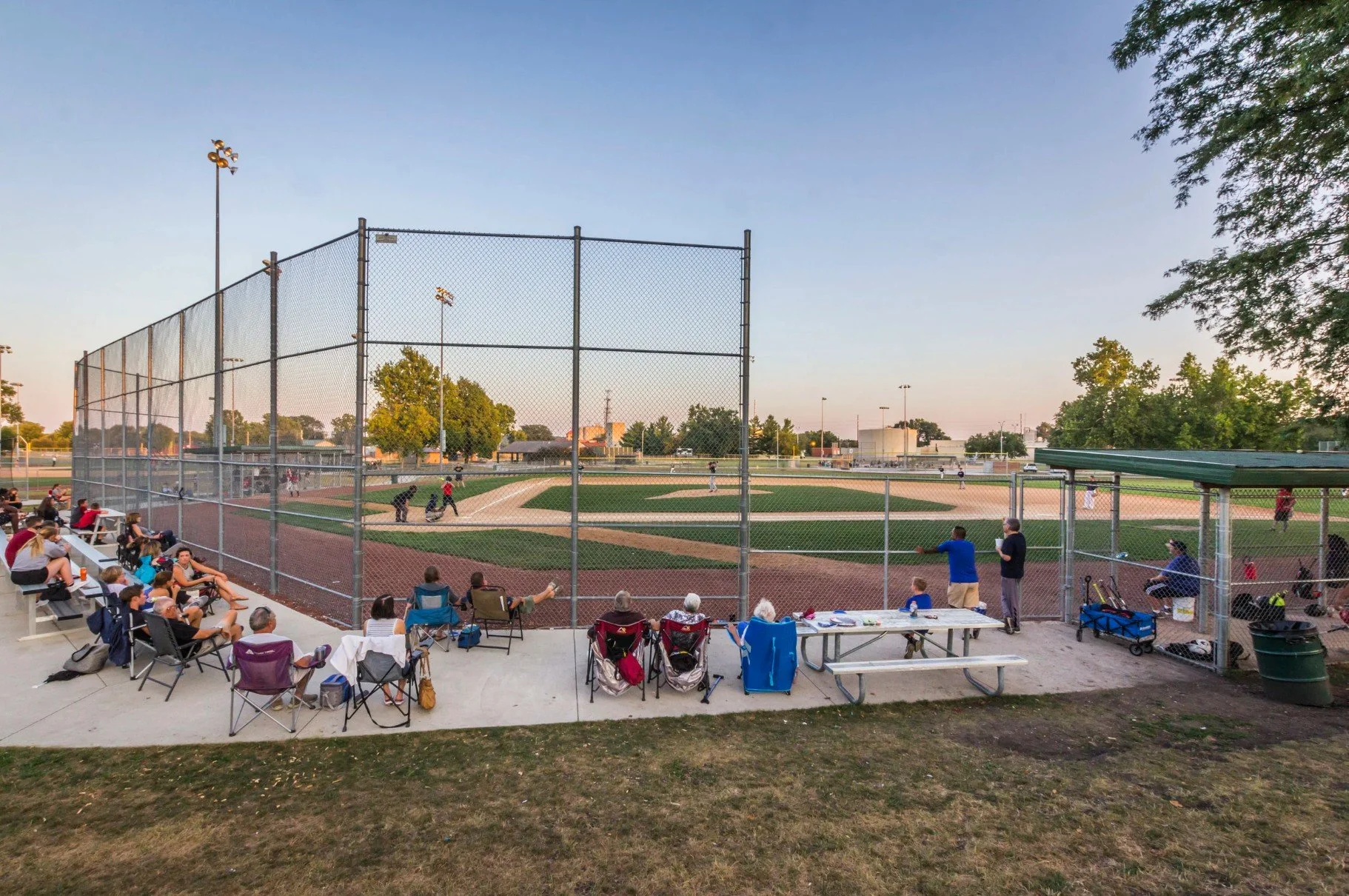
/Holiday Park is the oldest baseball complex in West Des Moines, Iowa, and serves as a bustling destination for young athletes, families, local fans, and visiting teams. Managing a high-volume athletic hub requires a balance between intense operational demands, precise spatial organization, and clear site navigation. When the City of West Des Moines sought to revitalize and expand the facility, JBC Landscape Architects provided complete design leadership across multiple phases, linking overall site master planning directly with construction documentation and custom wayfinding signage.
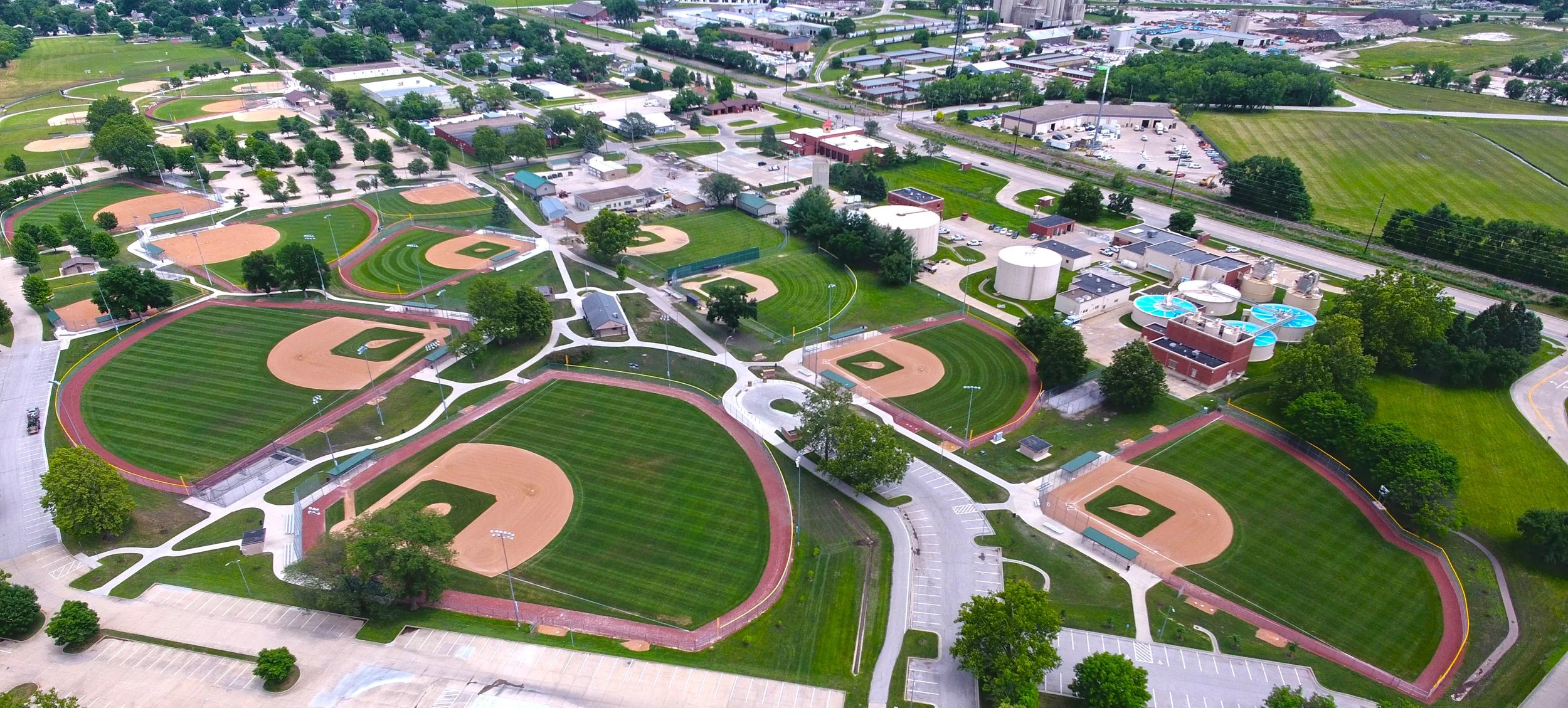
Designing High Performance Sports Fields
The foundation of the project began with a comprehensive master plan for the youth sports complex. Serving as the lead site and sports field designer, JBC evaluated the complex's existing layout, pedestrian flow, open spaces, and athletic facilities.
A central priority during the planning phase was balancing programming needs with practical maintenance practices. Ballfields endure significant wear throughout the season, and maintaining field quality requires precise planning from day one. JBC facilitated multiple stakeholder meetings to engage park operators, league representatives, and municipal staff. By capturing detailed input on turf performance, scheduling demands, and maintenance routines, JBC established a framework optimized for field longevity, safety, and seamless day-to-day operations.
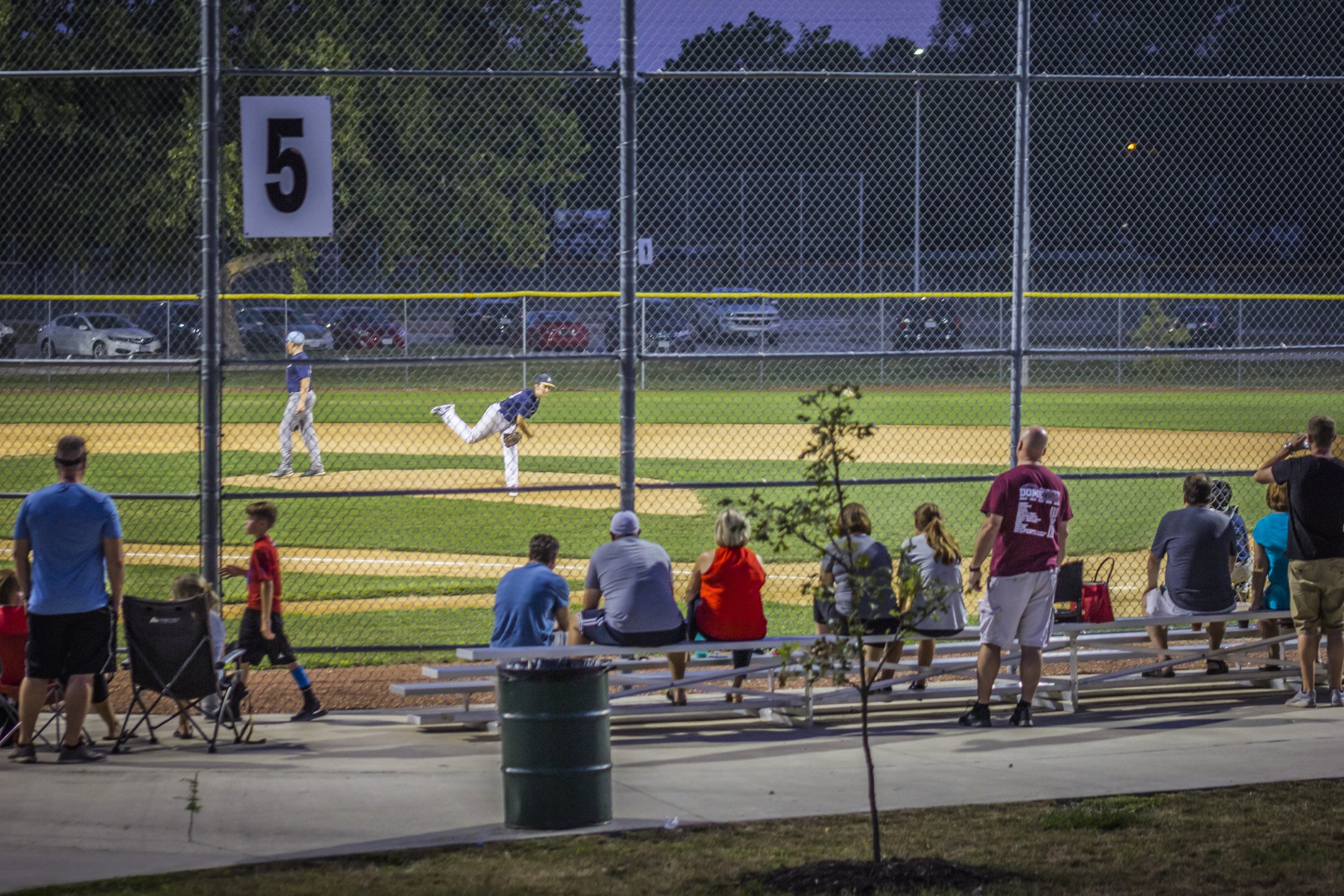
A Cohesive Vision for Park Wayfinding
As the athletic complex expanded, ensuring that visitors could easily navigate the multi-field site became a critical component of the user experience. Alongside the sports complex master plan, JBC developed the Holiday Park Wayfinding Signage Master Plan to create a unified graphic identity for the park.
The primary objective was establishing a park identity that captured existing local character using durable materials and intentional color palettes. The strategy accounted for all modes of travel, offering clear directional guidance for visitors arriving on foot, by bicycle, or by car. Key design objectives included:
Establishing a distinct park identity that honors local aesthetic standards and existing site character.
Developing graphic standards focused on visual clarity, municipal identity, and timeless design.
Identifying strategic signage locations to guide visitors to fields, amenities, and parking areas.
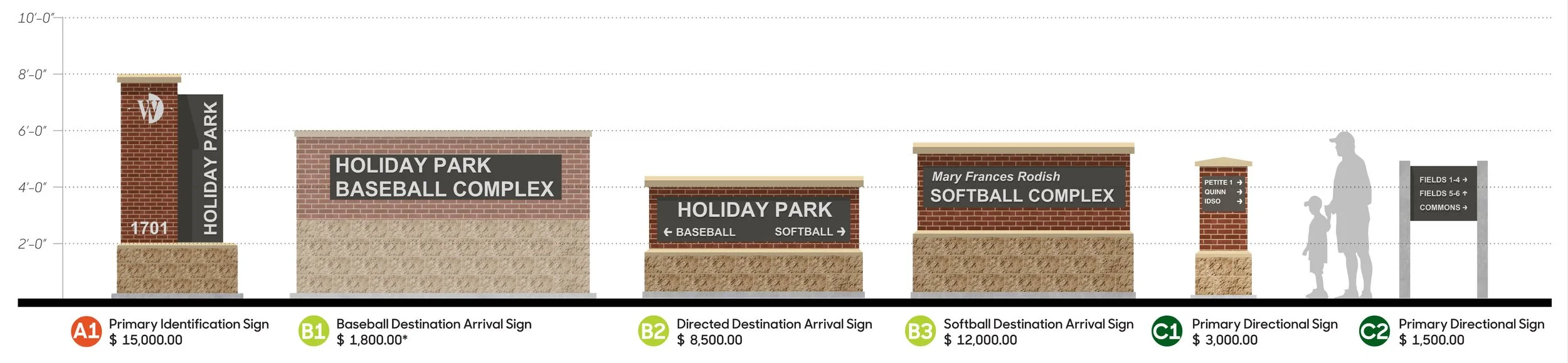
Preparing estimates of probable cost to guide municipal budgeting and phased rollouts.
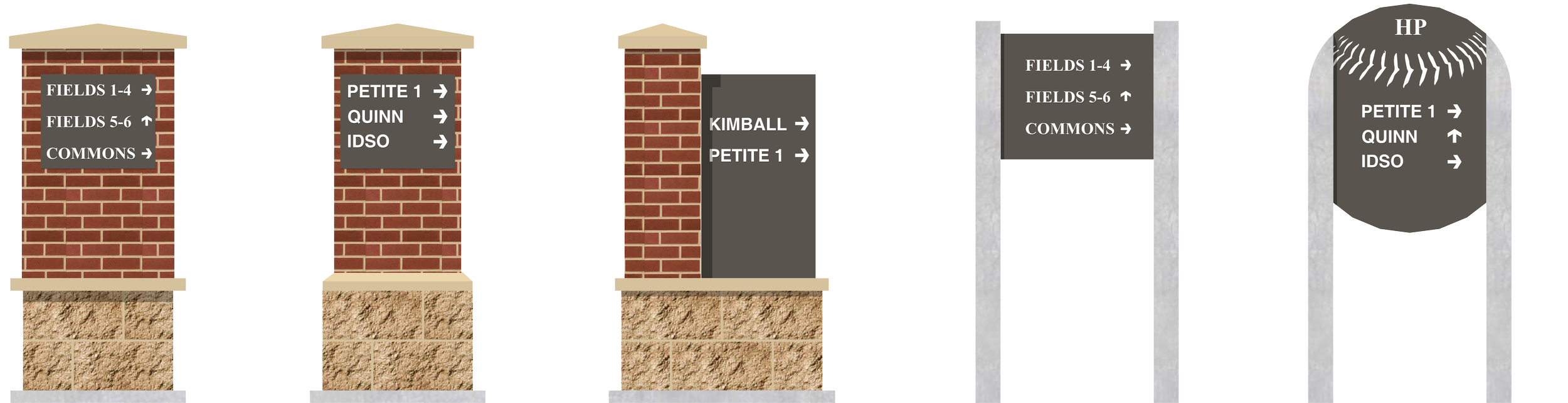
To maintain visual harmony, the signage family took inspiration from simple, geometric forms with consistent textures throughout. This design language provided clarity across the complex.
From Master Plan to Construction Documentation
Following the adoption of the wayfinding framework, the City of West Des Moines retained JBC to prepare construction documents for the wayfinding signage.
JBC drafted detailed construction plans and specifications for four distinct signage types across the park. The structural palette incorporated brick and precast stone masonry, bold aluminum block lettering, and durable fiberglass-embedded kiosk panels built to withstand changing weather conditions and public park activity.
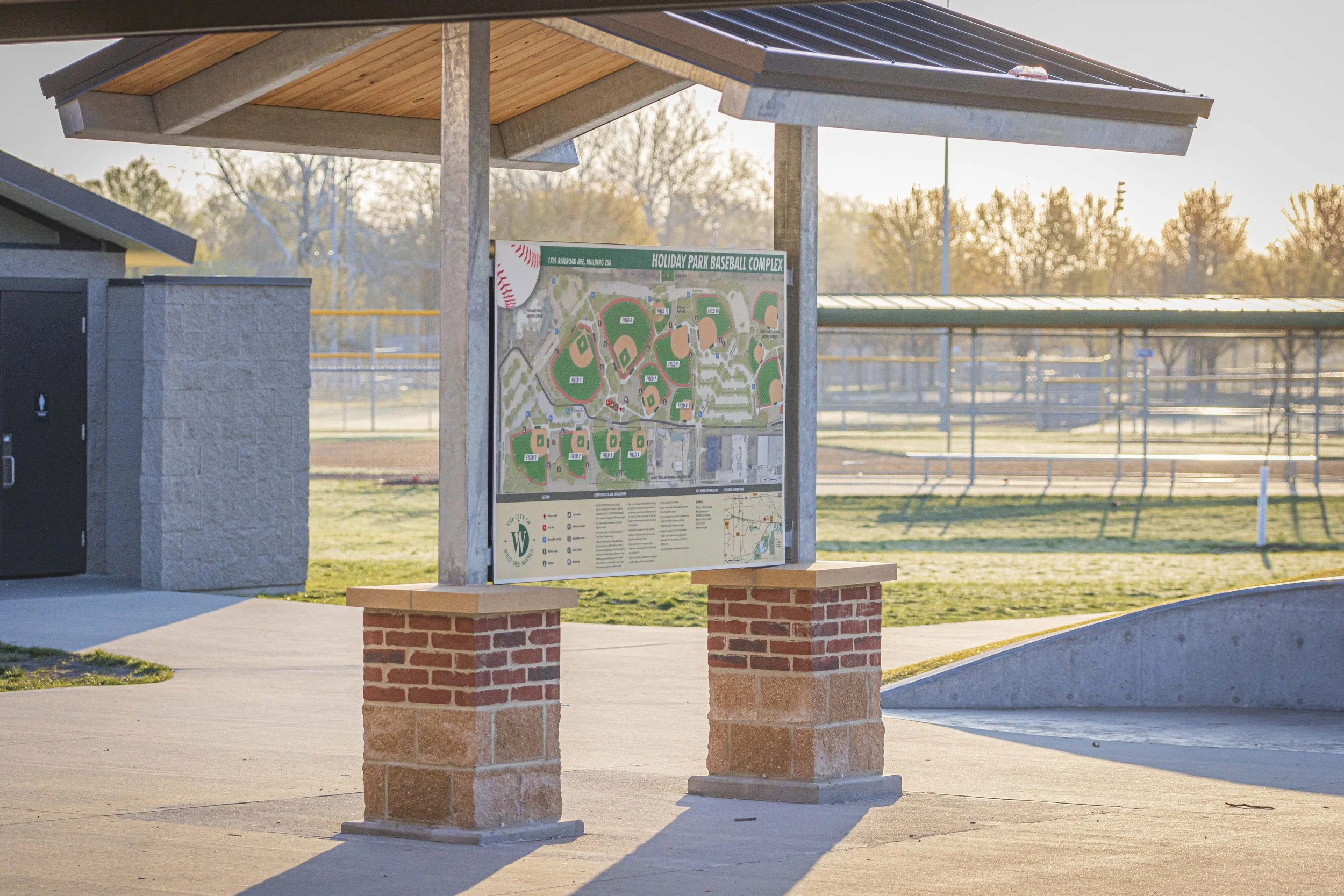
As part of the final design deliverables, JBC created custom, large-format complex maps for display in the informational kiosks positioned near major entry points and central pedestrian concourses. These detailed maps clearly distinguish between the baseball and softball complexes, helping first-time visitors locate specific fields, concessions, and restrooms.
Beyond design drafting, JBC provided full bidding and construction administration services throughout the implementation phases. Overseeing construction ensured that material selections, execution, and graphic standards aligned with the master plan's vision.
A Complete Transformation Driven by Continuity
By guiding the Holiday Park project from initial sports complex master planning through construction administration, JBC ensured total continuity between athletic functionality and site navigation. Today, the sports complex stands as a modernized, accessible athletic hub built to support generations of players throughout the community.