
Grounded in Legacy: Balancing History and Sustainability at the University of Kansas
/When people picture a university campus, they usually think of its architecture: grand limestone halls, modern research labs, and iconic clock towers. Buildings carry stories, but they only tell half of the tale. The land between those buildings (the ridges, open greens, mature tree canopies, and historic walkways) forms the physical frame of campus life.
Between 2000 and 2009, the Getty Foundation funded roughly 85 campus heritage preservation studies across the country. Among those initiatives involving landscape architects was the University of Kansas Campus Heritage Plan, one of the largest cultural landscape preservation and sustainability efforts ever undertaken for a Midwestern university.
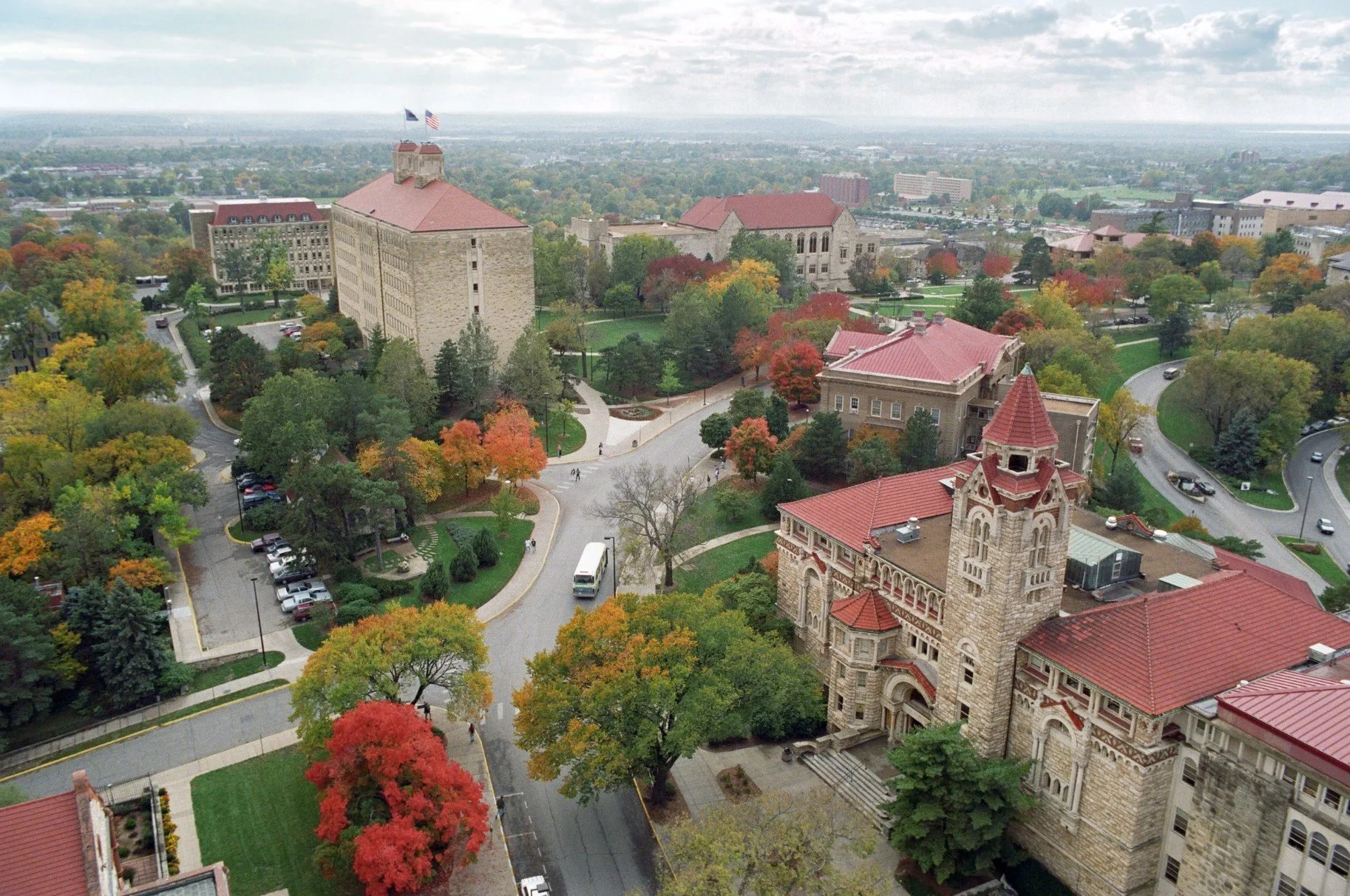
Sitting atop Mount Oread, a prominent hill overlooking the Wakarusa and Kaw River valleys in eastern Kansas, the 1,000+ acre campus anchors the community of Lawrence. JBC Landscape Architects joined a collaborative team alongside cultural landscape historian Frank Edgerton Martin, Treanor Architects, and Davis Preservation to evaluate and protect this historic ground.
The primary goal was clear: Promote stewardship across the historic campus by identifying, interpreting, and protecting its most significant sites, structures, and landscape elements. These physical layers document time and change on campus and serve as a valuable asset that continues to draw and inspire students, faculty, and visitors.
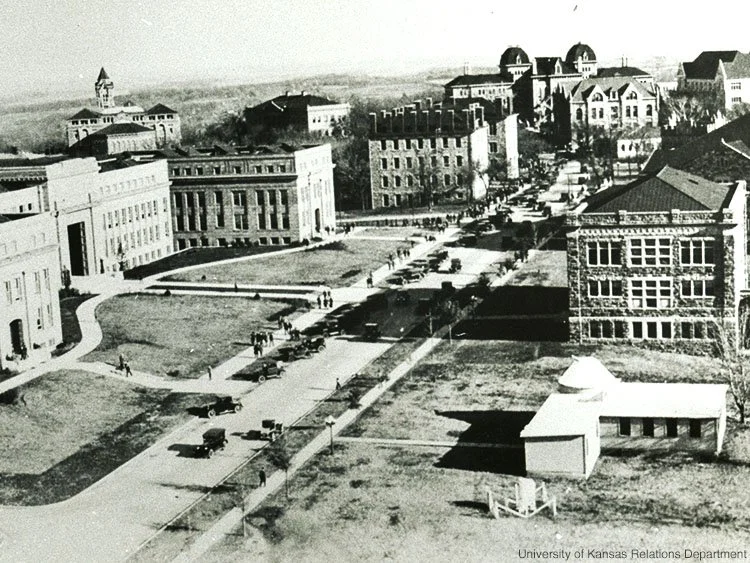
Achieving that goal was far from straightforward. The project faced a delicate political environment, a vast regional scale, and severe Kansas weather swings. As part of the process, JBC created new methods documenting cultural character to help decision makers actively protect it. The overarching goal was to help the university view its campus as an interconnected living landscape, not just a collection of standalone buildings.
Using regional ecological analysis, graphic site overlays, and spatial mapping, JBC established a defensible framework for evaluating the campus and its setting as a complete system.
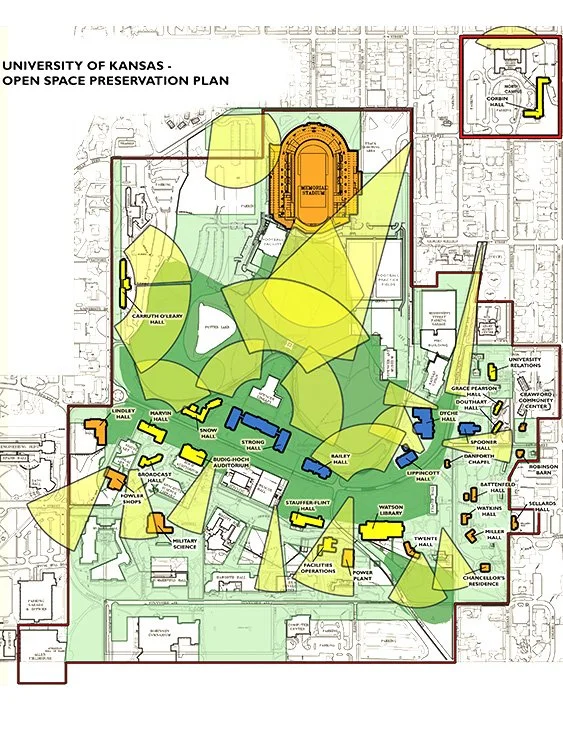
This master plan integrated sustainable water treatment practices and species diversity into historic conservation, proving that ecological performance and cultural stewardship can work together in a campus environment. The plan stands as one of the first in the nation to deliver realistic management tools that place landscape architecture on equal footing with building architecture.